|
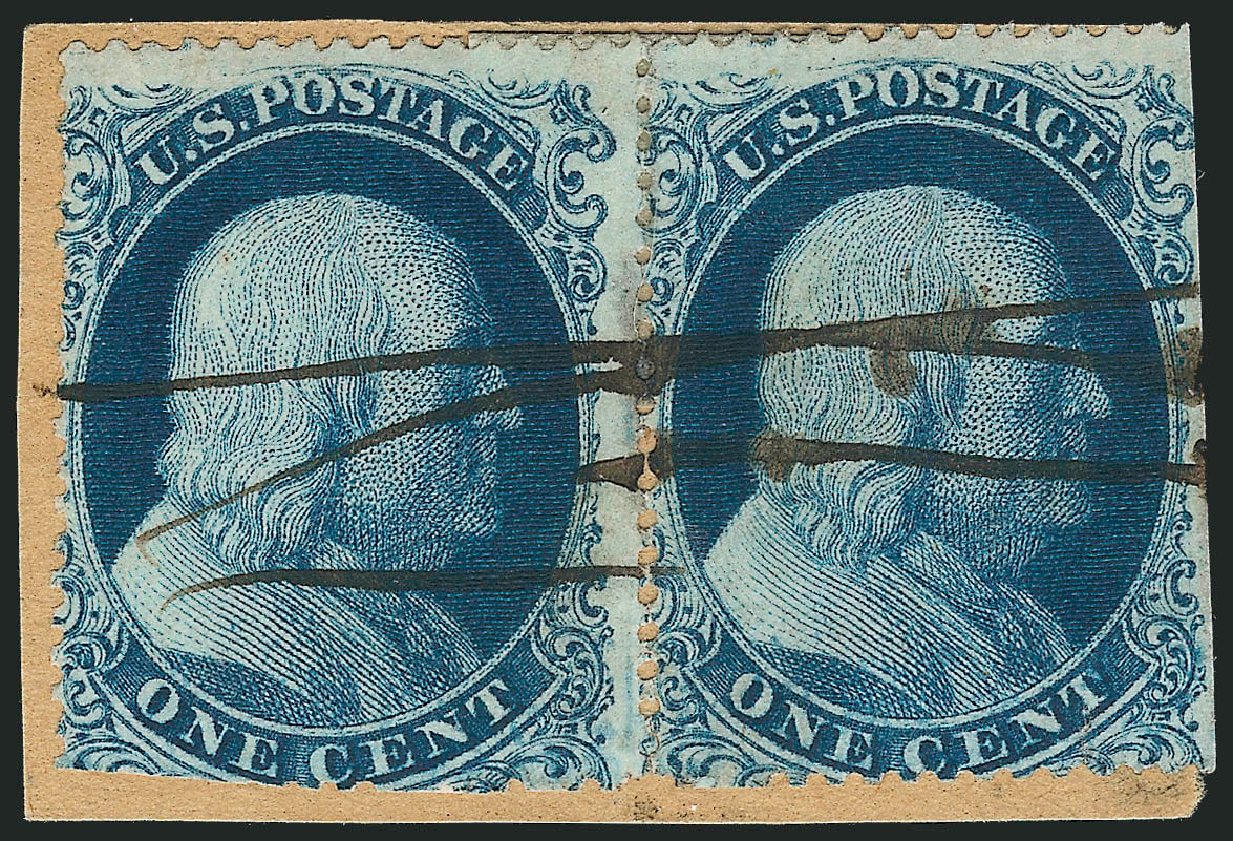
1c Blue, Ty. Ia (19). Positions 99-100L4, horizontal pair, perfs scissors-separated causing s.e. at right and partly at bottom, tied by pen strokes on small piece, intense shade, lifted and hinged in place, right stamp sealed tear at bottom right, otherwise Fine, a scarce pair of the perforated Type Ia, Scott Retail as two pen-cancelled singles Robert Siegel Auction Galleries, Mar 2011, Sale 1006, Lot 1112 |
US$1,200.00 |
|
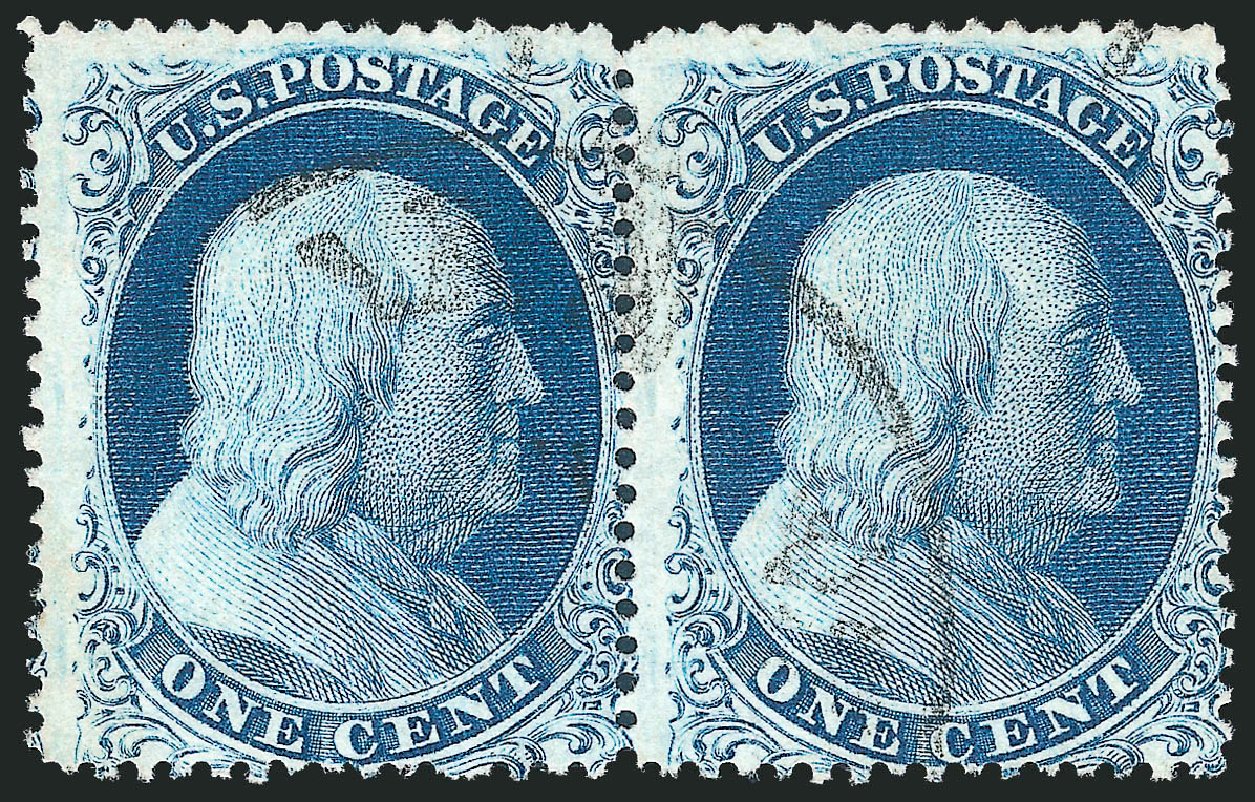
1c Blue, Ty. Ia (Scott 19). Positions 93-94L4, horizontal pair, brilliant color on crisp paper, light strike of circular datestamp, centered slightly to bottom right FINE. AN EXTREMELY RARE PAIR OF THE PERFORATED 1857 ONE-CENT TYPE Ia. MULTIPLES CONTAINING TWO STAMPS FROM THE BOTTOM ROW OF PLATE FOUR ARE EXTREMELY RARE. WE HAVE ONLY OFFERED AN UNUSED PAIR IN A BLOCK, A PAIR ON COVER, AND ONE OTHER USED PAIR (PEN-CANCELLED) SINCE KEEPING COMPUTERIZED RECORDS. Type Ia, imperforate and perforated, only comes from 18 positions in the bottom rows of the right and left panes of Plate 4. Multiples are extremely rare. This is the first multiple we have offered in over five years, and only three others are contained in Power Search. Robert Siegel Auction Galleries, Mar 2011, Sale 1006, Lot 1111 |
US$4,500.00 |
|
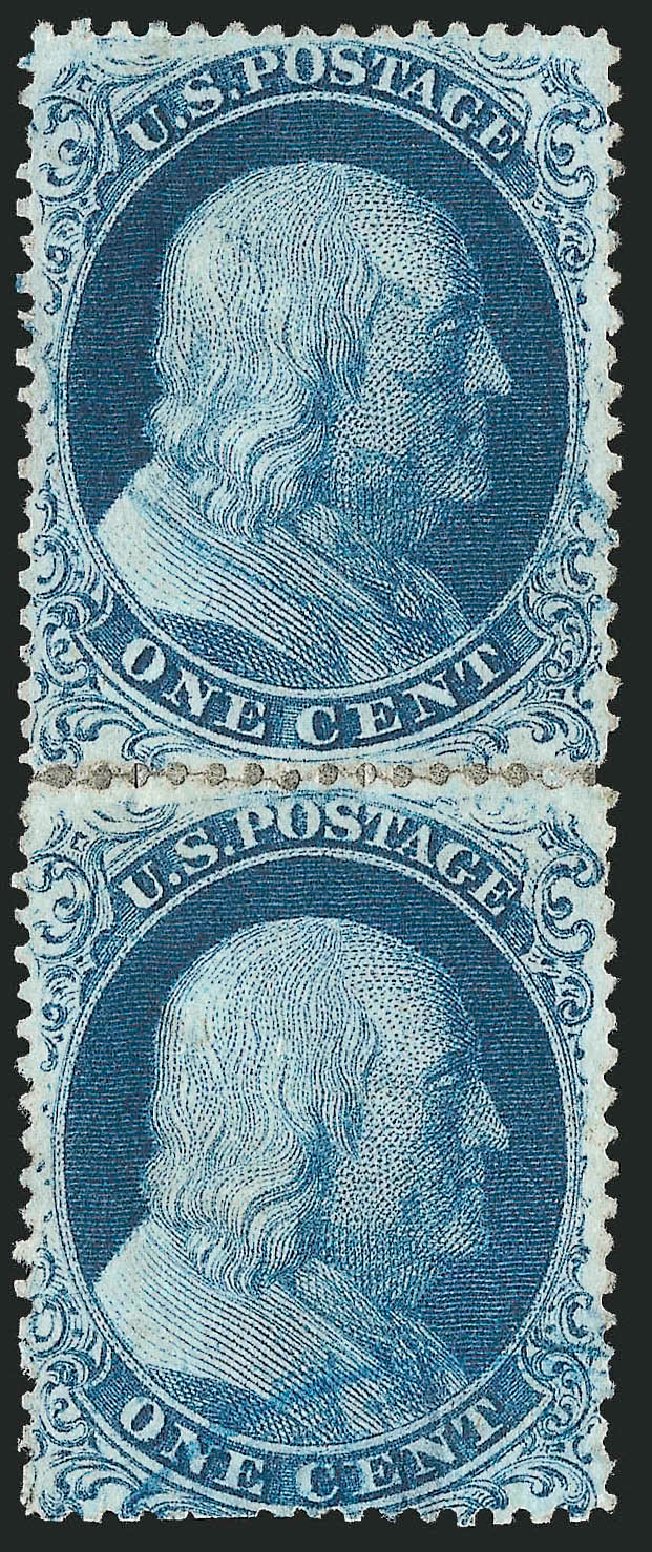
1c Blue, Ty. Ic (19b). Positions 81/91R4, rejoined vertical pair, both stamps Type Ic (E and F Reliefs, respectively), gorgeous color, light strikes of blue circular datestamp leave entire designs clearly visible, pair separated and rejoined, few flaws including bottom stamp thin spot VERY FINE APPEARANCE. A RARE MULTIPLE OF THE DESIRABLE AND SCARCE 1857 ONE-CENT TYPE Ic, SCOTT 19b. NEINKEN NOTES THAT THE BOTTOM STAMP — POSITION 91R4 — IS THE BEST EXAMPLE OF TYPE Ic. THIS IS ALSO THE ONLY PLACE ON THE PLATE WHERE BOTH STAMPS IN A PAIR CAN BE TYPE Ic. Type Ic is a sub-type of Type Ia. The difference between the two is that the bottom right plume on Type Ic is less complete. Neinken notes that only eight or nine positions yield this type. The two F Relief positions in the bottom row of Plate 4 (91R and 96R) are nearly identical to the other 18 Type Ia positions in the same row. Elsewhere on the plate, six or seven E Relief positions show Type Ic characteristics to a lesser degree. Four positions in the ninth row are Type Ic E Relief entries, but only one of these — Position 81R — adjoins one of the two Type Ic F Relief positions in the bottom row. Therefore, nowhere but 81/91R on Plate 4 does a Type Ic/Ic vertical pair occur. Ex Neinken. Scott Retail for singles is $10,250.00. Robert Siegel Auction Galleries, Mar 2011, Sale 1006, Lot 1110 |
US$2,100.00 |
|
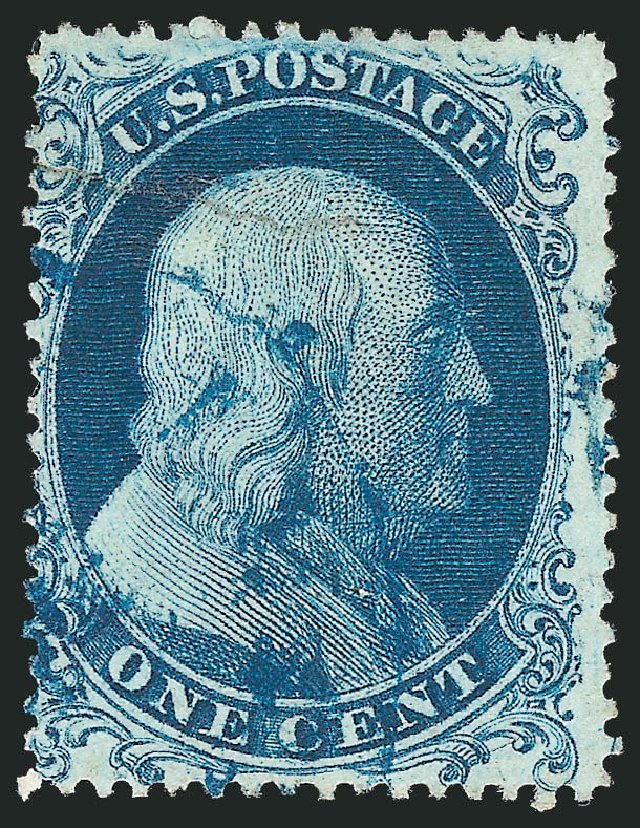
1c Blue, Ty. Ia (Scott 19). Position 93L4, rich color nicely complemented by blue circular datestamp, sealed horizontal tear approximately halfway thru stamp toward the top, otherwise Fine example of this scarce type, undoubtedly one of “Jerry’s Kids”, found misidentified and unloved in a dealer’s stock Robert Siegel Auction Galleries, Mar 2011, Sale 1006, Lot 1106 |
US$1,000.00 |
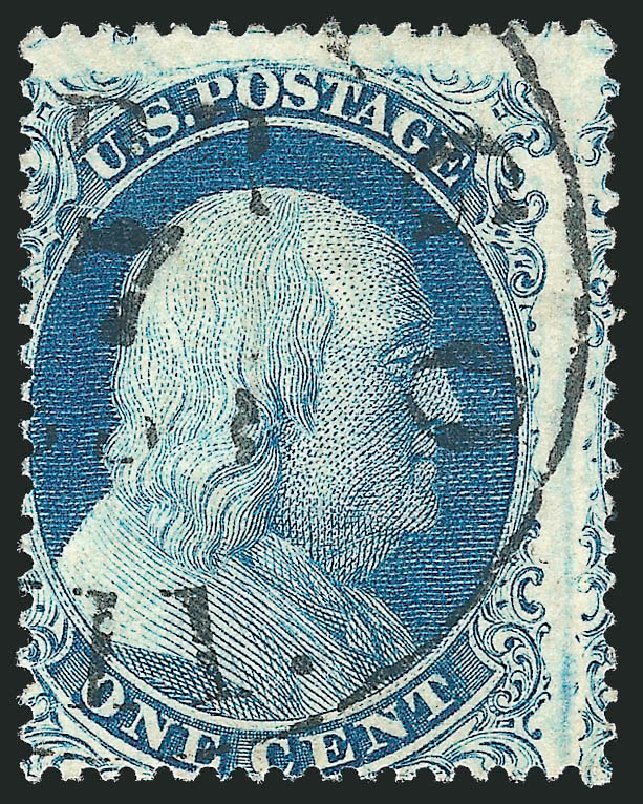
|
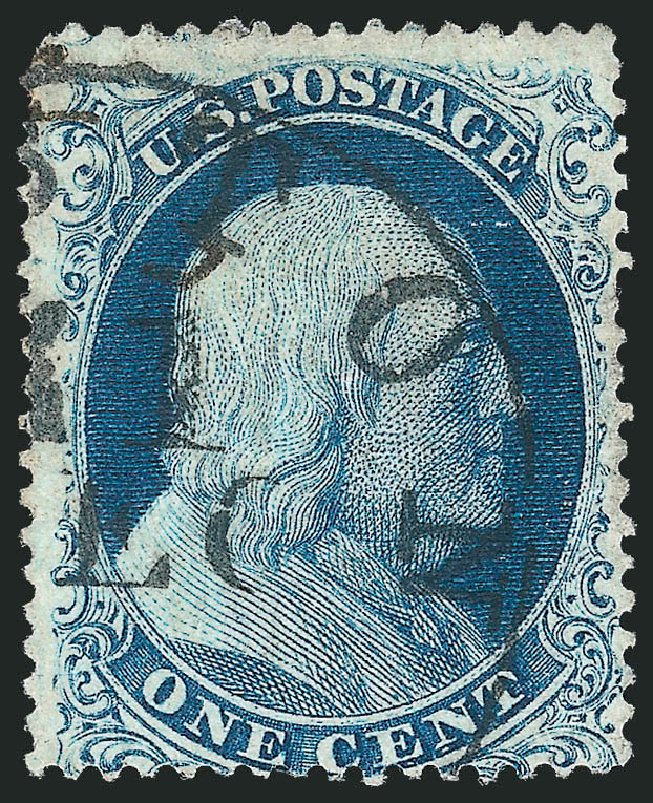
1c Blue, Ty. Ia (Scott 19). Position 95L4, bright color, neat strike of Chicago circular datestamp, centered to left and with part of stamp at right captured in margin, small flaw at center, otherwise Very Good, Type Ia only comes from 18 positions in the bottom rows of the right and left panes of Plate 4 Robert Siegel Auction Galleries, Mar 2011, Sale 1006, Lot 1105 |
US$1,100.00 |
|
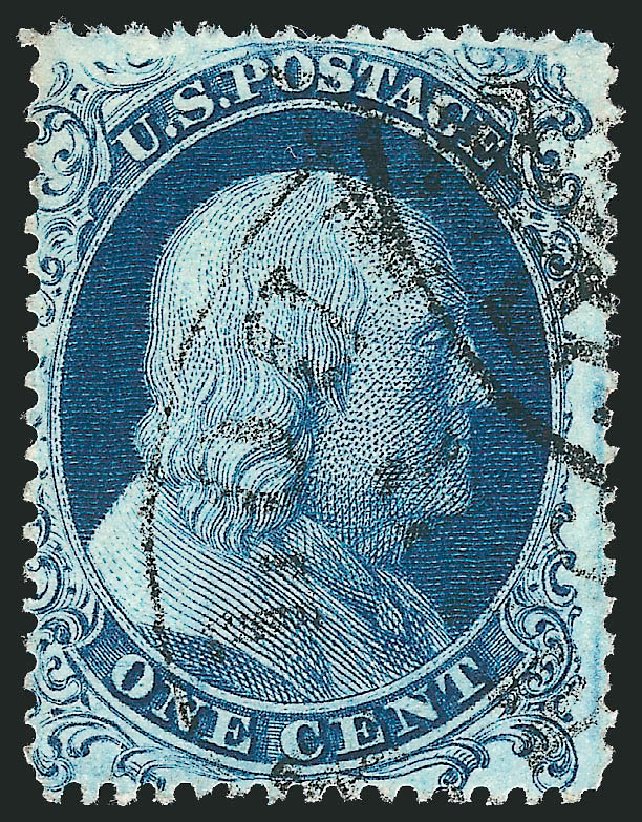
1c Blue, Ty. Ia (Scott 19). Position 94L4, rich color, neat strike of Boston circular datestamp, single short perf at right, two small perf flaws at top and slightly toned, otherwise Fine, Type Ia only comes from 18 positions in the bottom rows of the right and left panes of Plate 4 Robert Siegel Auction Galleries, Mar 2011, Sale 1006, Lot 1104 |
US$1,700.00 |
|
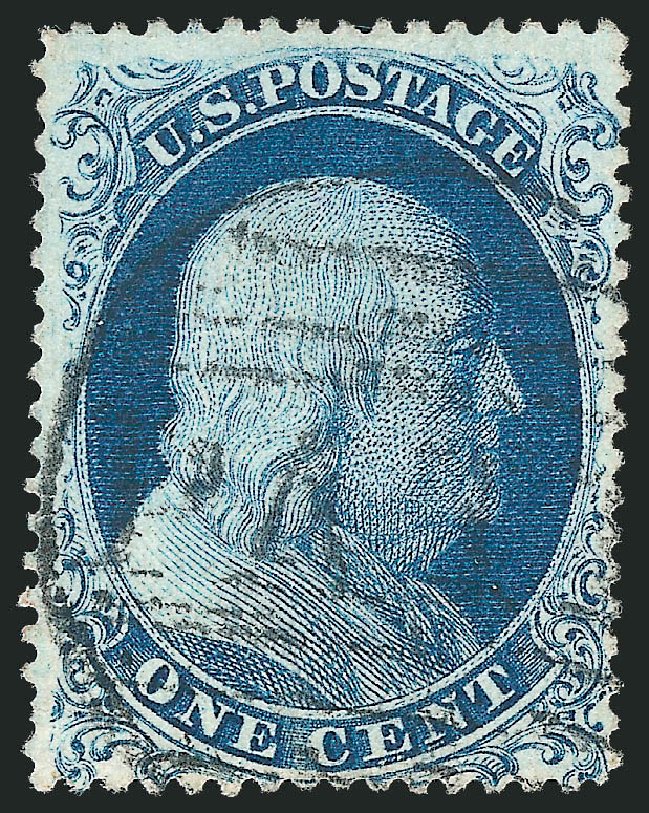
1c Blue, Ty. Ia (Scott 19). Position 99R4, deep rich color, choice centering from top to bottom which clearly shows the characteristics of the type, short perf at top, light corner perf crease at bottom left is barely noticeable FINE APPEARING EXAMPLE OF THE SCARCE PERFORATED 1857 ONE-CENT TYPE Ia. Type Ia, imperforate and perforated, only comes from 18 positions in the bottom rows of the right and left panes of Plate 4. Robert Siegel Auction Galleries, Mar 2011, Sale 1006, Lot 1103 |
US$2,100.00 |
|
1c Blue, Ty. Ia (Scott 19). Position 97L4 with curl on shoulder, bright shade, neat strike of large Boston “Paid” grid, faint natural vertical wrinkle/crease at lower right is invisible but flashes when drying after dipping VERY FINE. A DESIRABLE EXAMPLE OF THE 1857 ONE-CENT TYPE Ia, ESPECIALLY WITH THE “CURL ON SHOULDER” PLATE VARIETY. Due to narrow spacing on the plate, most examples of this stamp have part of the type characteristics cut away by the perforations. The example offered here is centered better than most. Robert Siegel Auction Galleries, Mar 2011, Sale 1006, Lot 1102 |
US$3,000.00 |
|
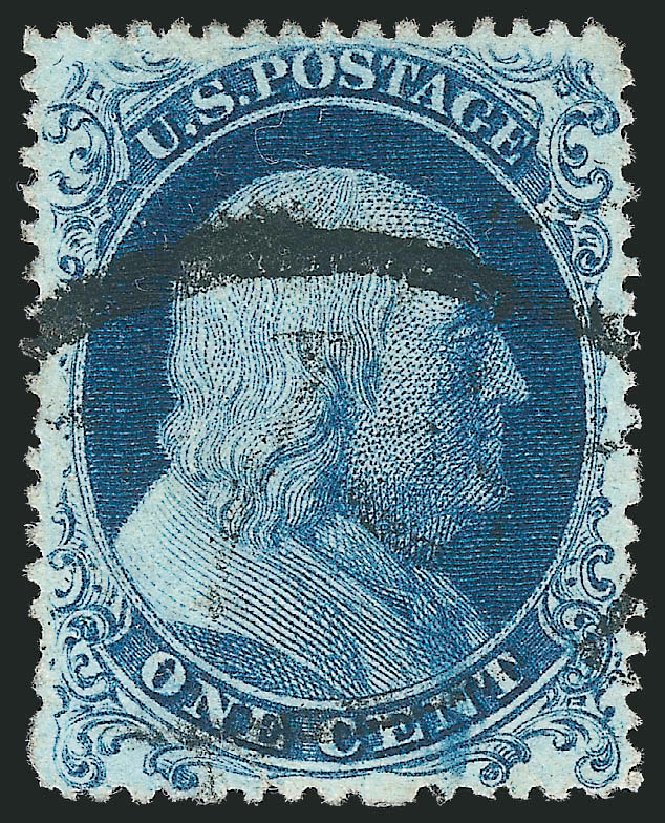
1c Blue, Ty. Ia (Scott 19). Position 91L4, rich color on bright paper, bold strike of circular datestamp, choice centering for this difficult issue, small corner creases at lower left incl. one ending in tiny tear EXTREMELY FINE APPEARANCE. A BEAUTIFUL EXAMPLE OF THE RARE 1857 ONE-CENT TYPE Ia, WHICH SHOWS ALL OF THE PLATING CHARACTERISTICS OF THE TYPE. Type Ia, imperforate and perforated, only comes from 18 positions in the bottom rows of the right and left panes of Plate 4. Due to difficulties in spacing many have perforations affecting the design at bottom, which is a shame since this is the defining characteristic of the type. The example offered here, with choice centering and showing the full design, is very rare. Ex Neinken. With 1969 P.F. certificate Robert Siegel Auction Galleries, Mar 2011, Sale 1006, Lot 1101 |
US$3,250.00 |
|
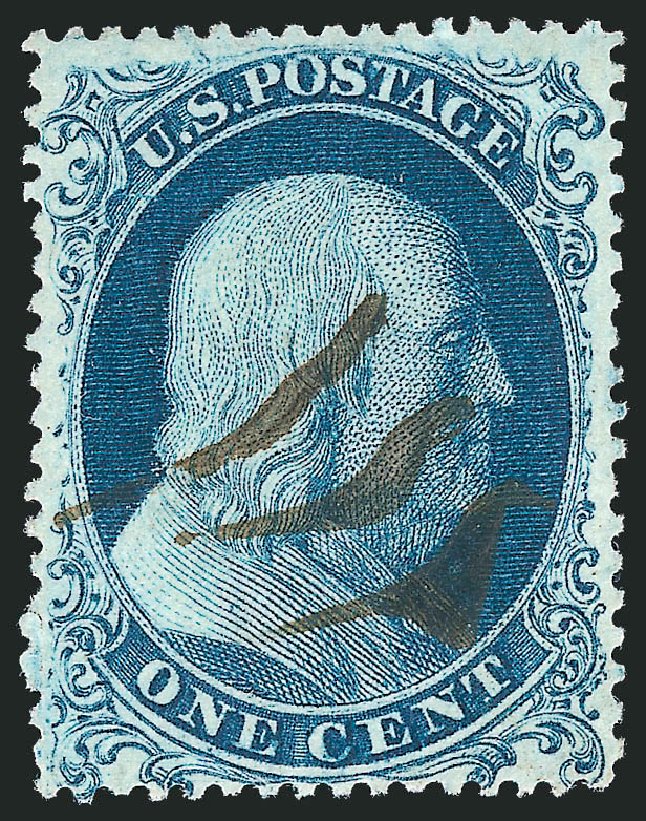
1c Blue, Ty. Ia (19). Position 95L4, bright color and detailed impression, neat manuscript cancels VERY FINE EXAMPLE OF THE PERFORATED 1857 ONE-CENT TYPE Ia. Type Ia, imperforate and perforated, only comes from 18 positions in the bottom rows of the right and left panes of Plate 4. Scott Retail as with manuscript cancel Robert Siegel Auction Galleries, Mar 2011, Sale 1006, Lot 1100 |
US$3,250.00 |
|
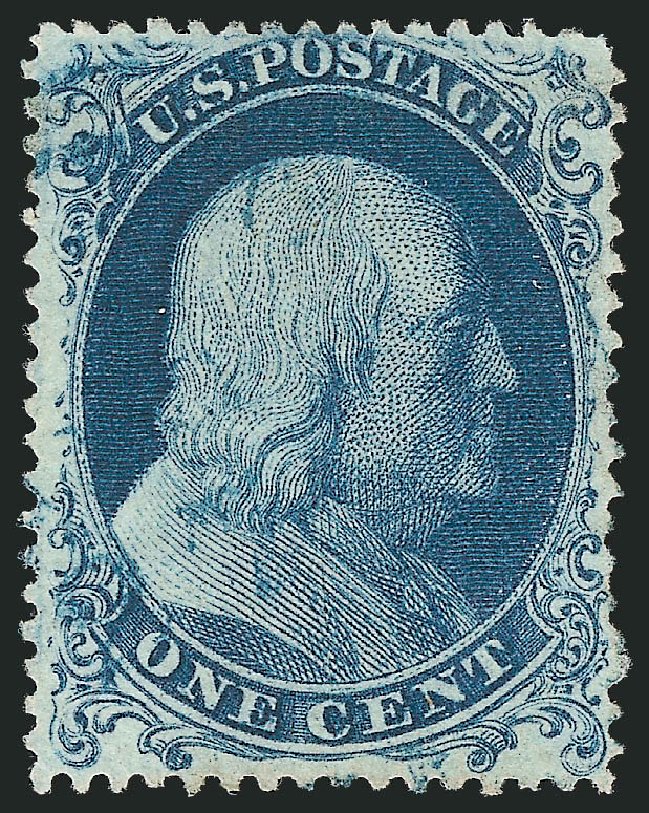
1c Blue, Ty. Ia (Scott 19). Position 93L4, pretty shade on bright paper, unobtrusive strike of blue circular datestamp, light pre-printing paper wrinkle at bottom EXTREMELY FINE APPEARANCE. A BEAUTIFUL LIGHTLY-CANCELLED EXAMPLE OF THE PERFORATED 1857 ONE-CENT TYPE Ia, WHICH CLEARLY SHOWS THE CHARACTERISTICS OF THE TYPE. Type Ia, imperforate and perforated, only comes from 18 positions in the bottom rows of the right and left panes of Plate 4. Due to difficulties in perforating sheets from Plate 4, many examples of Type Ia have perforations cutting into the design at bottom, which destroys the defining characteristic of the type. The example offered here, with choice centering and showing the full design, is very rare. Two small backstamps applied by European dealers Robert Siegel Auction Galleries, Mar 2011, Sale 1006, Lot 1099 |
US$6,250.00 |
|
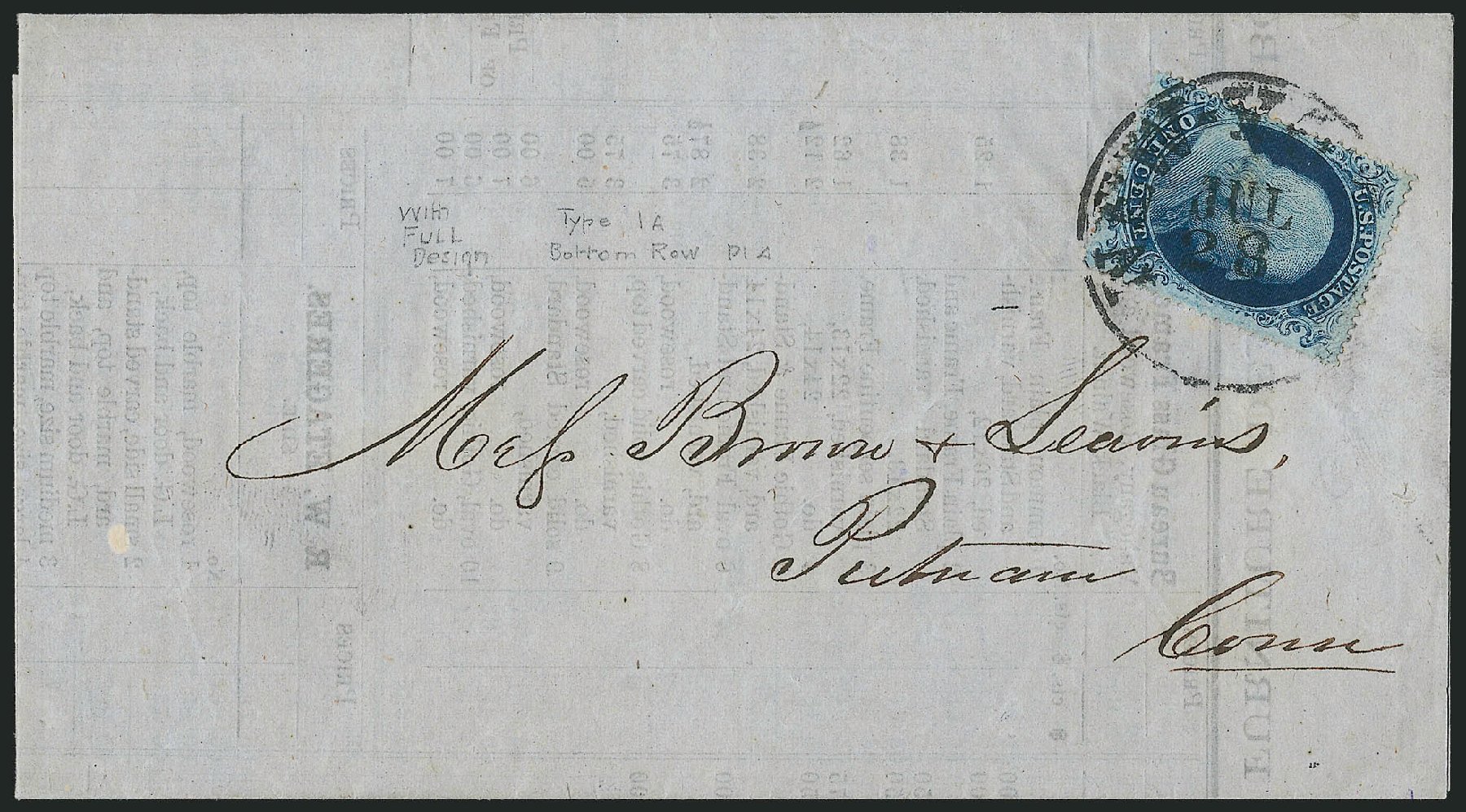
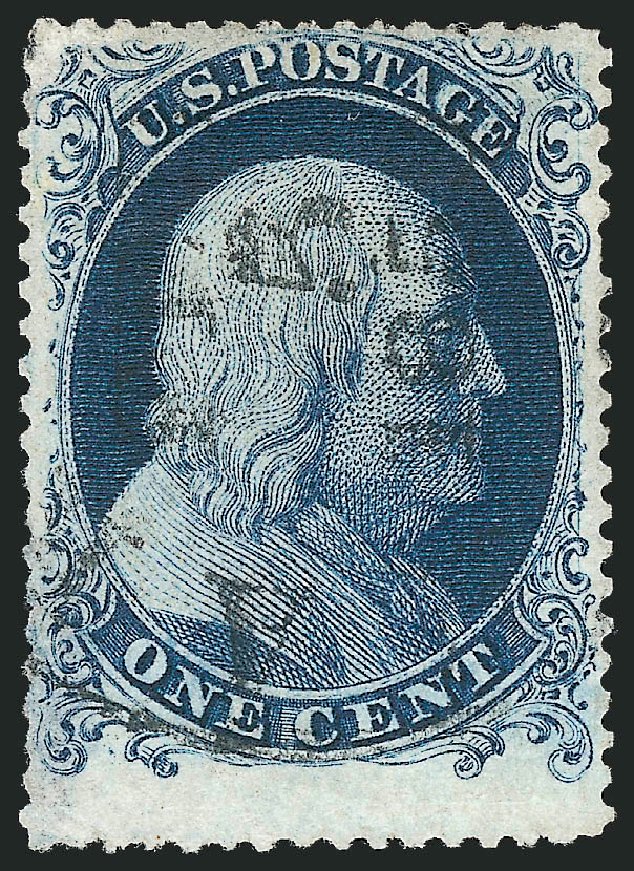
1c Blue, Ty. Ia (19). Position 97R4, unusually choice centering with wide-spaced perforations, deep rich color and sharp proof-like impression, tied by well-struck “New-York Jul. 28” circular datestamp on folded printed prices current for furniture dealers with illustration of building inside, addressed to Putnam Conn., likely an 1857 use which would make this used two days after the earliest documented use of any 1c perforated stamp VERY FINE AND CHOICE. A PHENOMENAL EXAMPLE OF THE 1857 ONE-CENT TYPE Ia PERFORATED ISSUE WITH WIDE-SPACED PERFORATIONS, SHOWING THE FULL DESIGN AT BOTH TOP AND BOTTOM. Type Ia was produced by only 18 of the 20 bottom-row positions on Plate 4. Although Plate 4 was designed with sufficient space to accommodate perforations, the height of the top row and bottom row positions resulted in the perforations often cutting into the design at either top or bottom. For this reason, stamps from the bottom row of Plate 4 with the lower part of the design intact or nearly intact are especially desirable. The exceptions to the normal cut-into condition of top-row and bottom-row Plate 4 stamps are those with wide-spaced perforations. It has been assumed for years that the pins of the bottom row of the perforator were reset to create more space, but some students of the 1851-57 Issue have begun to reexamine this aspect of Plate 4 production to seek alternative explanations for wide-spaced perforations. Whatever the cause, wide-spaced stamps are extremely rare and highly desirable, because they exhibit all of the features that define their respective types. Ashbrook states: “I consider perforated Type IA stamps that are not touched by perforations as the rarest stamps in the 1857 perforated issue.” (Neinken book, p. 279). The Scott Catalogue contains a footnote to the basic price quotes: “Copies of this stamp exist with perforations not touching the design at any point. Such copies command very high prices.” Ex Neinken. Signed Ashbrook. Robert Siegel Auction Galleries, Mar 2011, Sale 1006, Lot 1098 |
US$5,250.00 |
|
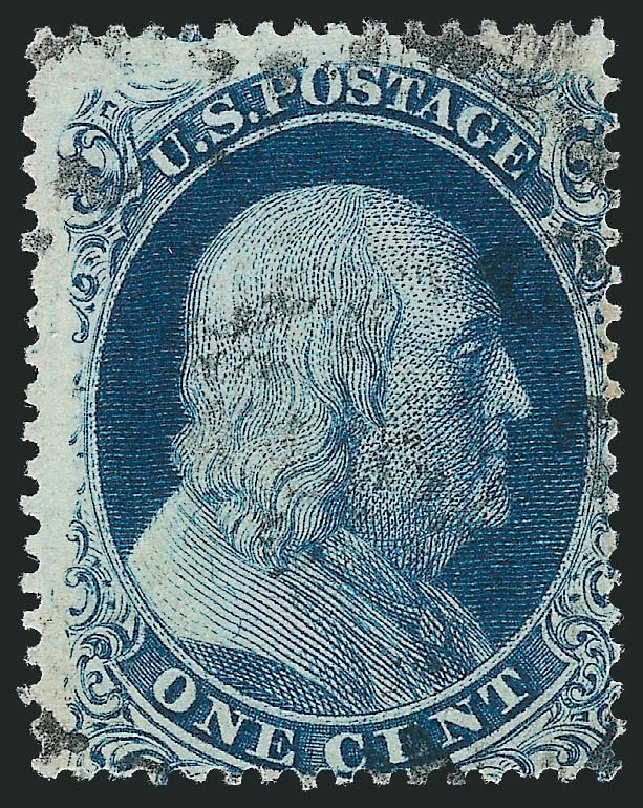
1c Blue, Ty. Ia (19). Position 92R2, rich color and proof-like impression, light strike of circular datestamp, wide-spaced perforations at top and bottom, thin spot along lower left VERY FINE APPEARANCE. AN EXCEEDINGLY RARE EXAMPLE OF THE 1857 ONE-CENT TYPE Ia WITH WIDE-SPACED PERFORATIONS. EXAMPLES WITH WIDE-SPACED PERFORATIONS ARE EXTREMELY RARE AND DESIRABLE. Type Ia stamps were produced from 18 of the 20 bottom-row positions on Plate 4. After perforations were introduced in mid-1857, sheets on hand printed from Plates 1 Late and 2 were fed through the new perforating machine, but the narrow spaces between stamps made perforating difficult to accomplish without cutting into the designs. Plate 4 was produced in early 1857 when the introduction of perforations was anticipated, thus, it was entered from a new 6-relief transfer roll, and the spaces between stamps were enlarged to allow for perforations. Some Plate 4 sheets were issued in imperforate form (April to June 1857), while the greater portion was issued perforated beginning in July 1857, along with perforated sheets from Plates 1L and 2. Plate 4’s most distinctive feature is that the top row (Positions 1-10L and 1-10R) was entered with the designs complete at top (Type II) and the bottom row (Positions 91-100L and 91-100R) was entered with designs complete or nearly complete at bottom (Types Ia and Ic). Although the plate layout provided sufficient space for perforations, the height of the top-row and bottom-row designs was larger than others in the sheet, which resulted in perforations cutting into either the top or bottom rows, depending on which direction the sheet was fed into the perforator. Type Ia and Ic stamps from the bottom row are almost always cut into at bottom, an unfortunate situation for collectors because the bottom part of the design is what makes Type Ia and Ic stamps desirable. The exceptions to the normal cut-into condition of top-row and bottom-row Plate 4 stamps are those with wide-spaced perforations. It has been assumed for years that the pins of the bottom row of the perforator were reset to create more space, but some students of the 1851-57 Issue have begun to reexamine this aspect of Plate 4 production to seek alternative explanations for wide-spaced perforations. Whatever the cause, wide-spaced stamps are extremely rare and highly desirable, because they exhibit all of the features that define their respective types. Ashbrook states: “I consider perforated Type IA stamps that are not touched by perforations as the rarest stamps in the 1857 perforated issue.” (Neinken book, p. 279). The Scott Catalogue contains a footnote to the basic price quotes: “Copies of this stamp exist with perforations not touching the design at any point. Such copies command very high prices.” Ex Neinken and illustrated in his book (p. 281) Robert Siegel Auction Galleries, Mar 2011, Sale 1006, Lot 1097 |
US$6,250.00 |
|
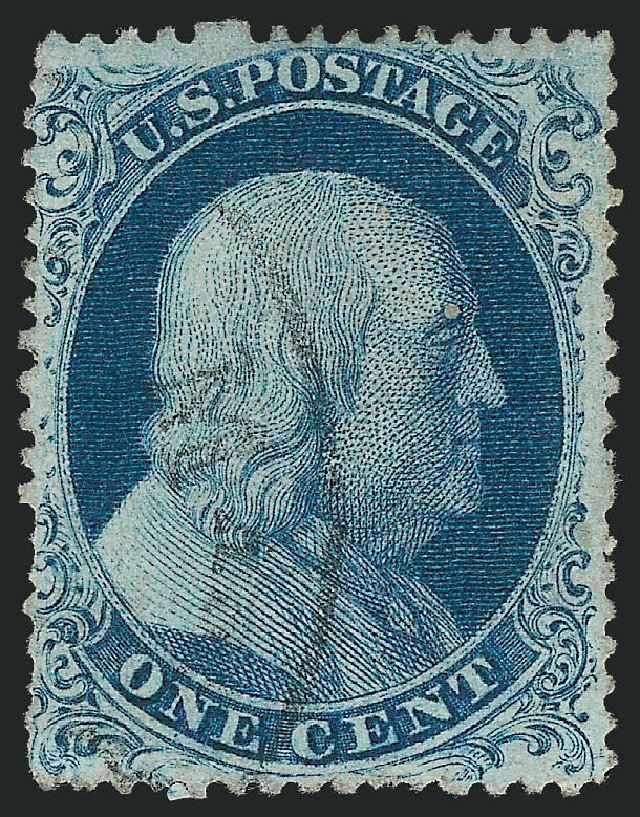
1c Blue, Ty. Ic (Scott 19b). Position 81R4, with curl on shoulder, rich color on bright paper, unobtrusive strike of circular datestamp, centered to bottom right, Very Good example of this scarce type, with 1982 P.F. certificate Robert Siegel Auction Galleries, Mar 2011, Sale 1006, Lot 1119 |
US$1,300.00 |
|
1c Blue, Ty. Ic (Scott 19b). Position 47L4, pretty shade, face-free circular datestamp, few perf flaws at lower left, otherwise Fine example of this scarce Type Ic E Relief, with 1979 P.F. certificate Robert Siegel Auction Galleries, Mar 2011, Sale 1006, Lot 1118 |
US$1,600.00 |