|
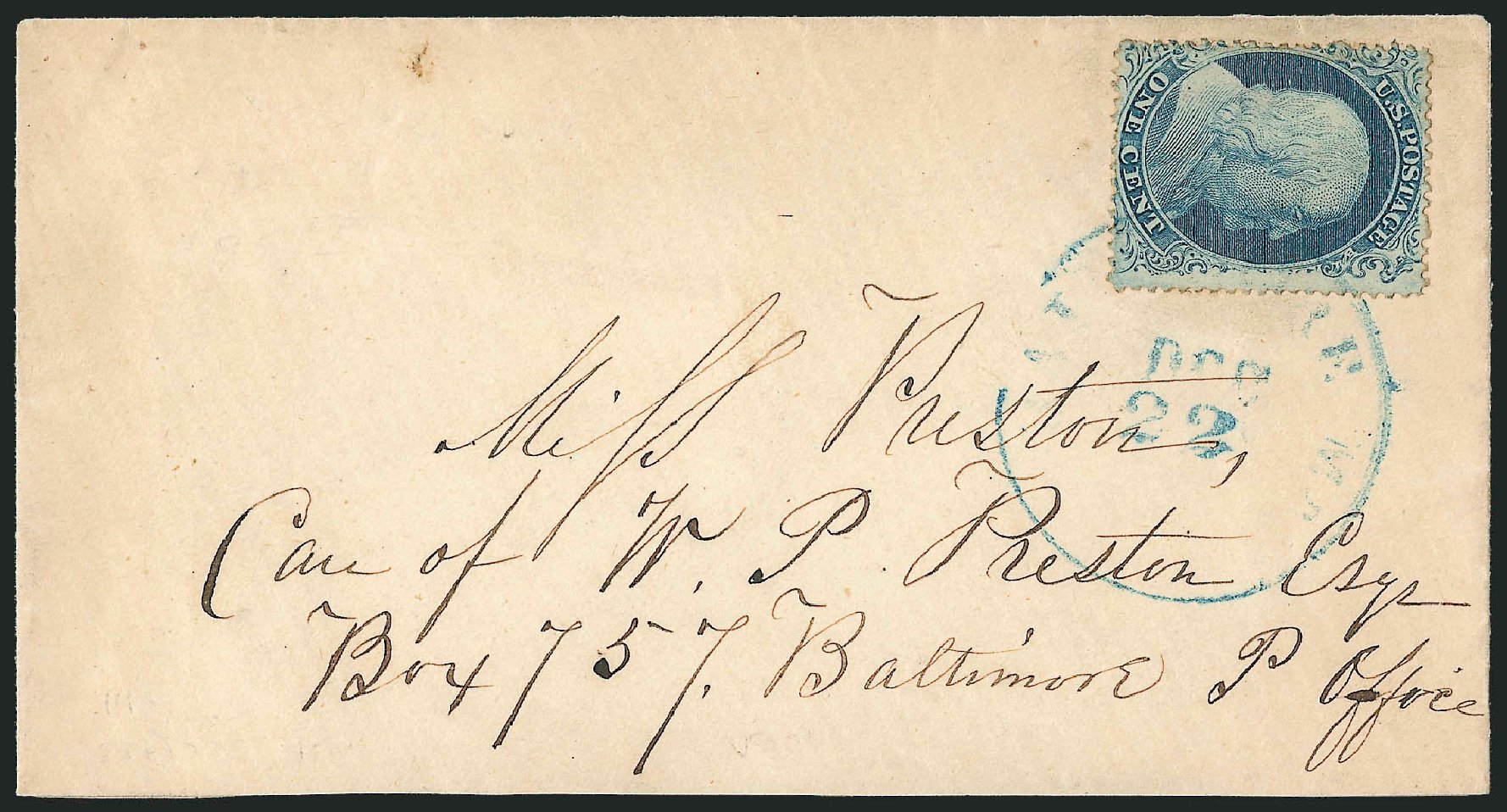
1c Blue, Ty. III (Scott 21). Position 36L4, bright shade, tied by blue “Baltimore Md. Dec. 22” circular datestamp on cover to a box at the Baltimore post office, barely reduced at bottom, Fine and scarce use of this Plate 4 stamp Robert Siegel Auction Galleries, Mar 2011, Sale 1006, Lot 1174 |
US$400.00 |
|
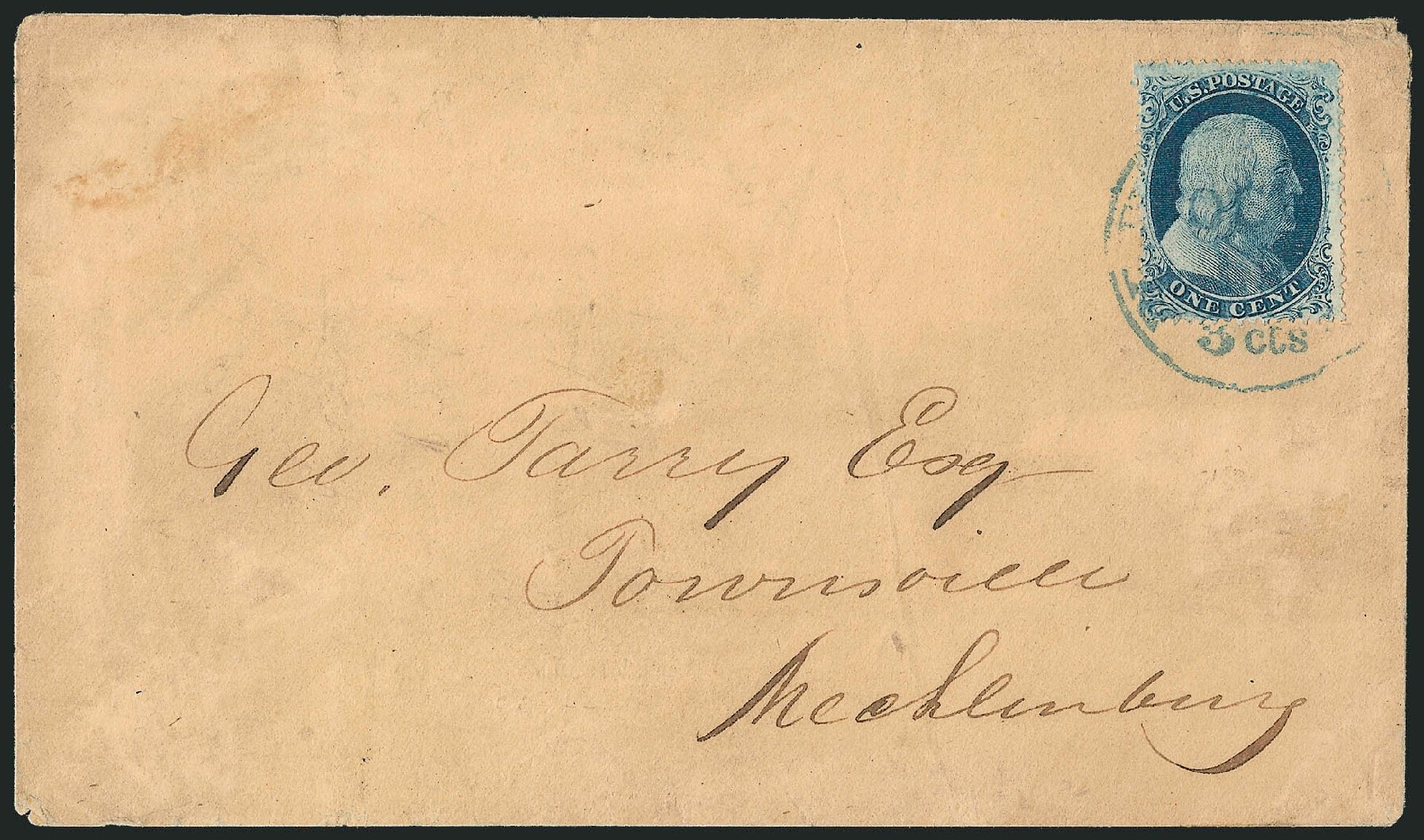
1c Blue, Ty. III (Scott 21). Position 54R4, brilliant color, tied by blue “Petersburg Va. 3cts. Oct 12” integral-rate circular datestamp on unsealed circular-rate cover to Townsville Va., some slight overall wear, Fine, unusual use of 3c integral-rate datestamp on a 1c circular-rate cover, ex Neinken Robert Siegel Auction Galleries, Mar 2011, Sale 1006, Lot 1173 |
US$550.00 |
|
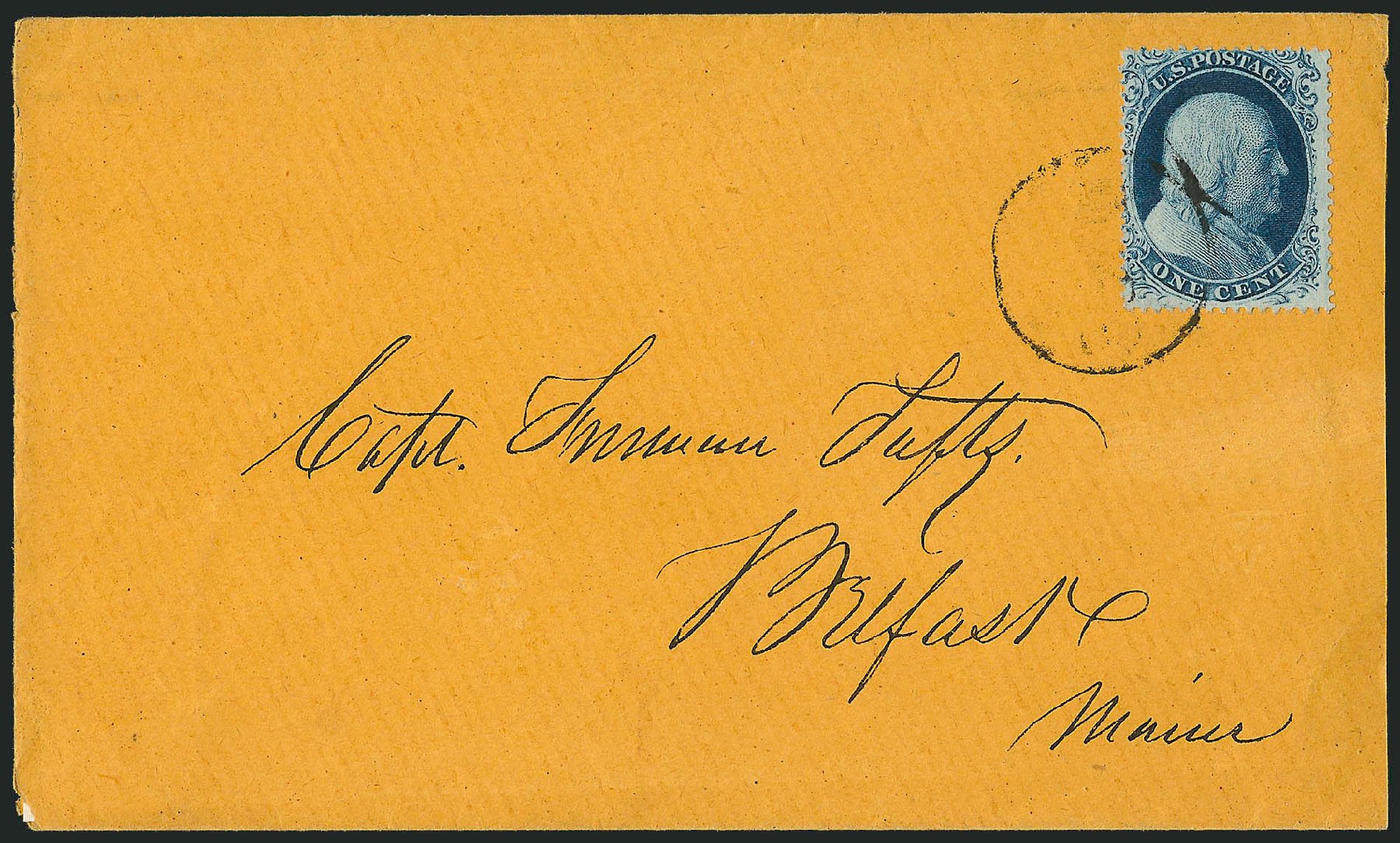
1c Blue, Ty. III (Scott 21). Position 22L4, rich color and detailed impression, tied by ring cancel buff cover to local addressee in Belfast Me., with original Dec. 27, 1858 enclosure, slightly reduced at right, Very Fine and attractive drop-rate use Robert Siegel Auction Galleries, Mar 2011, Sale 1006, Lot 1172 |
US$550.00 |
|
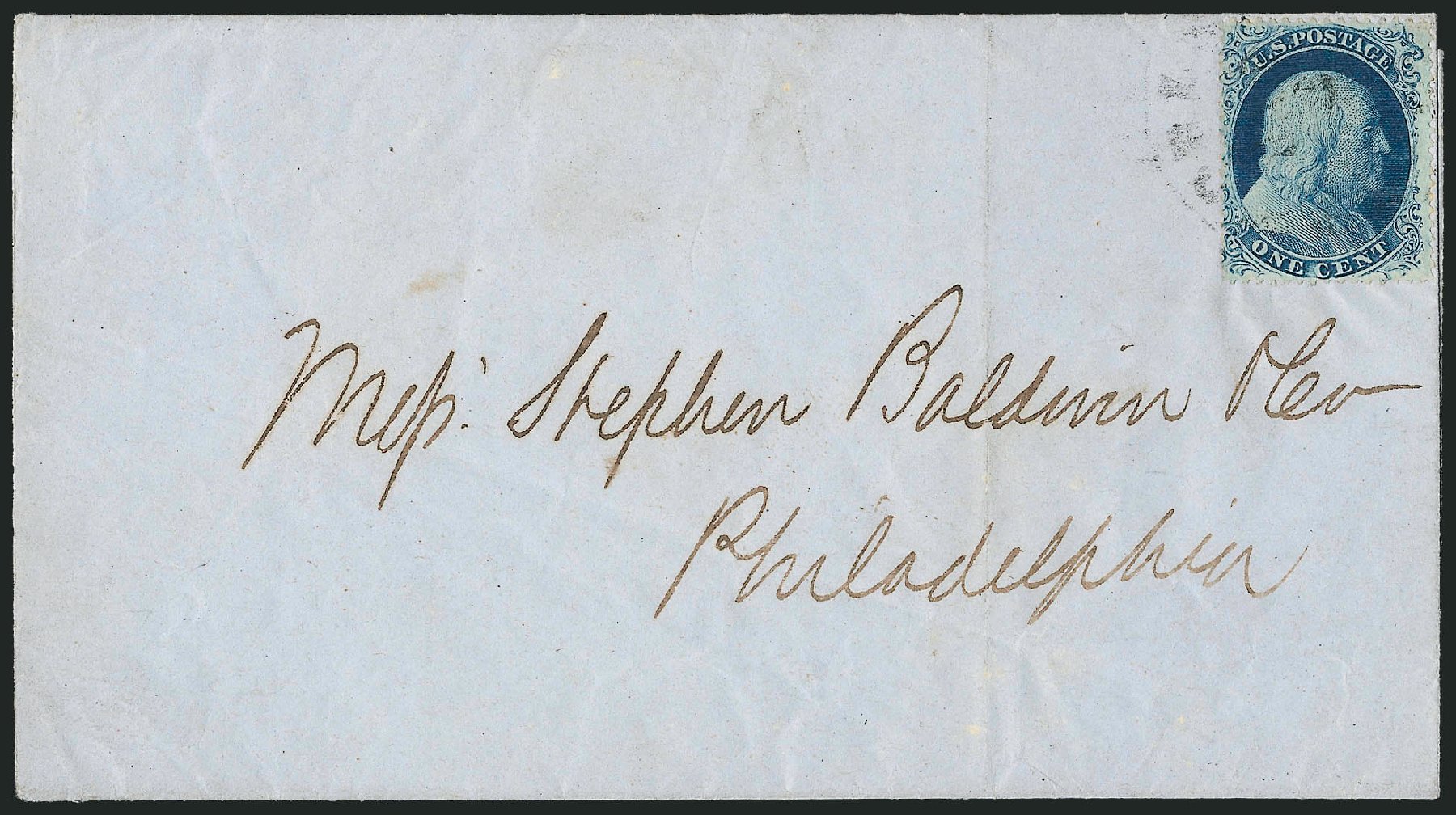
1c Blue, Ty. III (Scott 21). Position 66L4, rich color, tied by light strike of New Orleans circular datestamp on Jan. 1, 1859 folded printed prices current to Philadelphia, vertical file fold well away from stamp, Very Fine, attractive circular-rate use Robert Siegel Auction Galleries, Mar 2011, Sale 1006, Lot 1171 |
US$650.00 |

|
1c Blue, Ty. III (21). Positions 25-26R4, horizontal pair which has been separated and rejoined, bright color, unobtrusive manuscript cancels, choice centering, Very Fine, a scarce pair of the 1857 Type III from Plate 4, ex Neinken, Scott Retail as two pen cancelled singles Robert Siegel Auction Galleries, Mar 2011, Sale 1006, Lot 1169 |
US$850.00 |
|
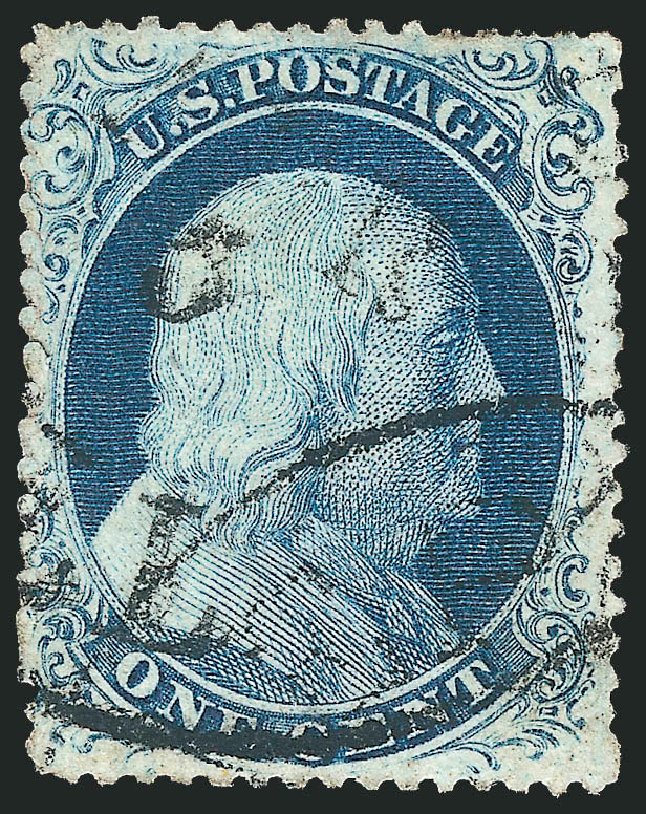
1c Blue, Ty. III (Scott 21). Position 26L4, detailed impression, neat circular datestamps, thin spot at center, Fine appearance, ex Neinken Robert Siegel Auction Galleries, Mar 2011, Sale 1006, Lot 1164 |
US$250.00 |
|
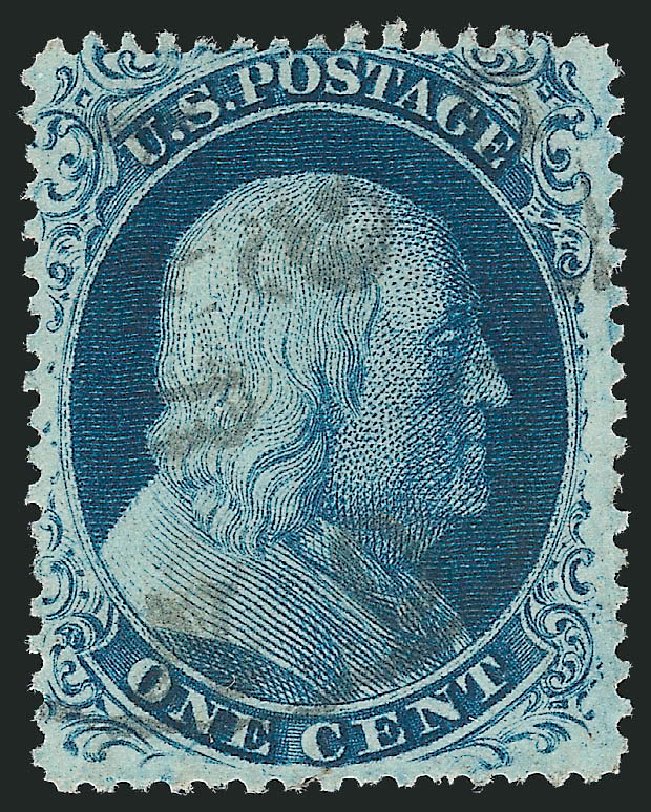
1c Blue, Ty. III (Scott 21). Position 25R4, intense shade, unobtrusive strike of circular datestamp, fresh and Fine Robert Siegel Auction Galleries, Mar 2011, Sale 1006, Lot 1163 |
US$600.00 |
|
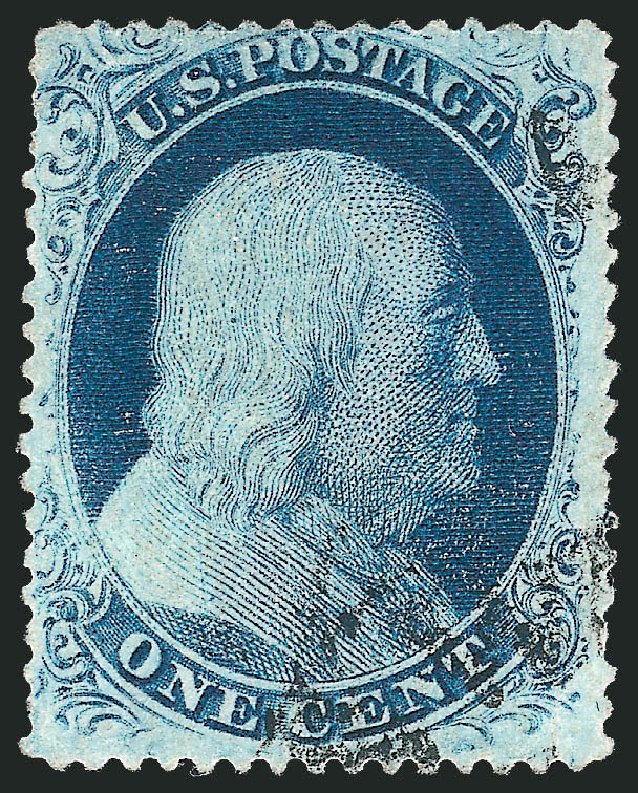
1c Blue, Ty. III (Scott 21). Plate 4, E Relief, rich color, face-free cancel, small vertical crease at lower right, otherwise Fine, ex Neinken Robert Siegel Auction Galleries, Mar 2011, Sale 1006, Lot 1162 |
US$375.00 |
|
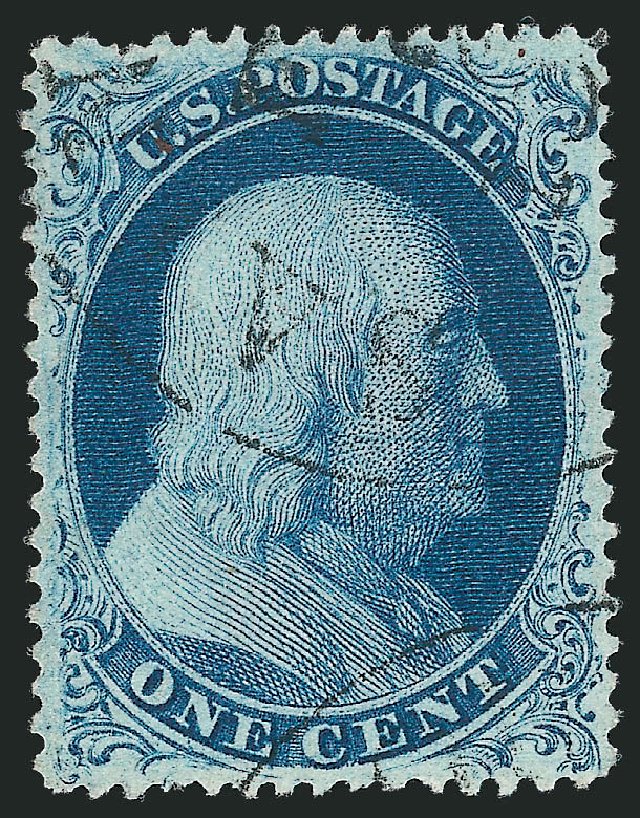
1c Blue, Ty. III (Scott 21). Position 46L4, bright color, unobtrusive circular datestamp, single pulled perf at top left, otherwise Very Fine, with 1989 P.F. certificate Robert Siegel Auction Galleries, Mar 2011, Sale 1006, Lot 1161 |
US$400.00 |
|
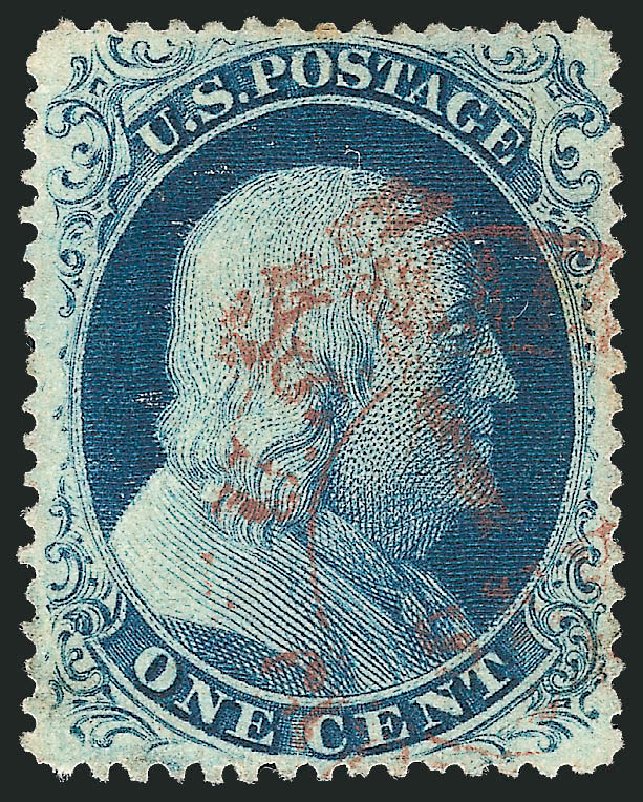
1c Blue, Ty. III (Scott 21). Position 66R4, pretty shade, neat strike of red New York City carrier datestamp, toned perf at top and faint toning at right, still Extremely Fine and remarkably choice condition for this scarce perforated 1c 1857 type, ex Neinken Robert Siegel Auction Galleries, Mar 2011, Sale 1006, Lot 1160 |
US$3,250.00 |
|
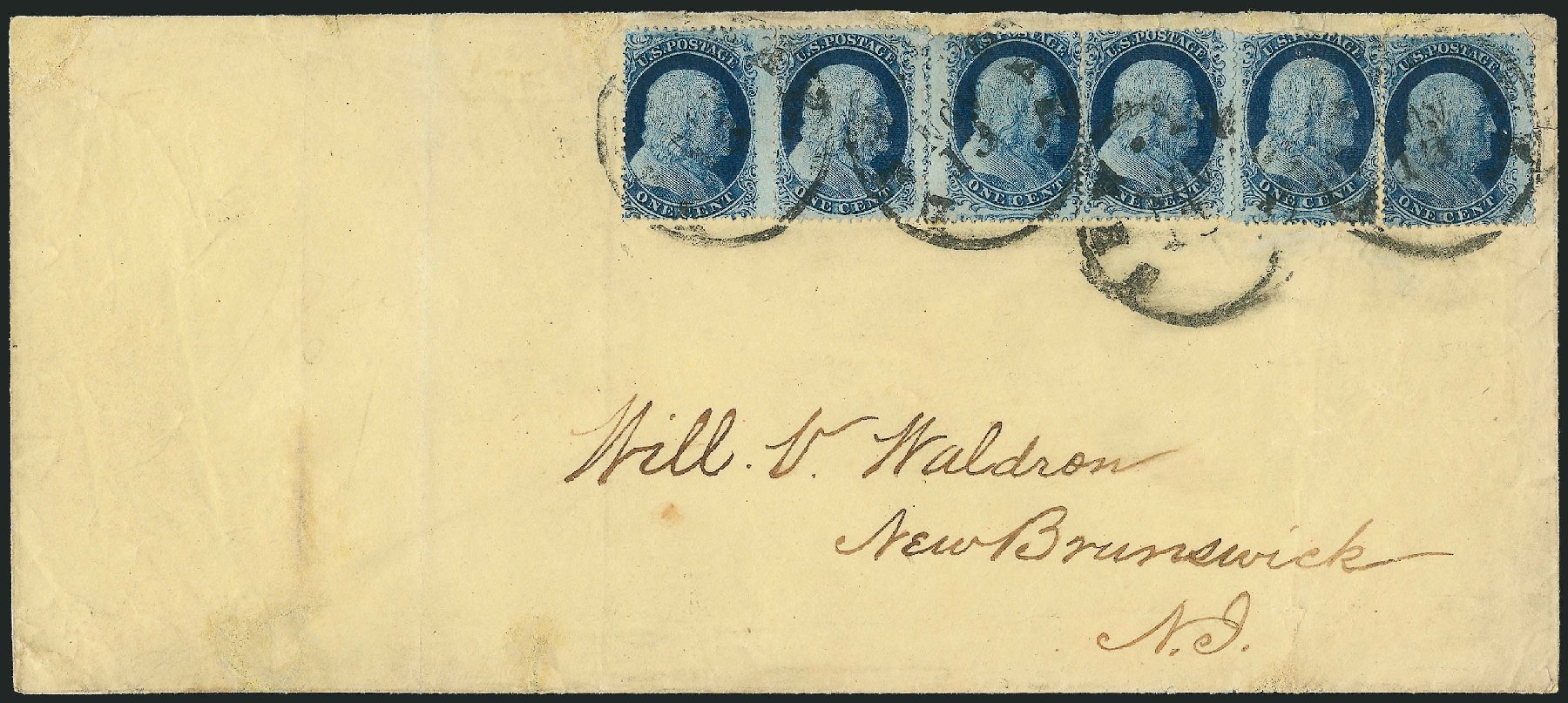
1c Blue, Ty. III, Position 99R2 (Scott 21). Single, second stamp from left in a string of six singles paying double 3c domestic rate (Positions 90R, 99R, 81R, 86R, 62R and 59R2), tied by “New-York Nov. 13” circular datestamps on legal-size cover to New Brunswick N.J., cover with some wear including small repairs at top, Position 99R2 tiny tear at upper right, but the perfs are well clear of breaks at top and bottom and the wide right margin nicely shows the double transfer VERY FINE APPEARANCE. THIS COVER BEARS THE LARGEST RECORDED FRANKING WITH A PERFORATED 99R2, WHICH IS WIDELY ESTEEMED AS THE MOST PROMINENT EXAMPLE OF A TYPE III ON ANY PLATE. THIS IS ONE OF THREE RECORDED COVERS BEARING THIS POSITION. On Plate 2, 198 of the 200 positions were Type II. Position 100R was Type II in the early stage of the plate, but as wear began to weaken the bottom line, it became Type IIIa with a small break at bottom. Positions 89R and 99R on Plate 2 have been the focus of special attention, because of their unusual nature. Ashbrook states: “A study of the double transfers of 89R2 and 99R2 is most interesting, because here in a vertical pair of positions we have two distinct varieties… The 99R2 stamp is a fresh entry that was short transferred both at top and bottom over an original entry that had been erased… The stamp, 89R2, is a re-entry, but not in the proper sense of this term, because the re-entry on the lower part of this position was an error, as it was not made to correct an existent fault of the original 89R transfer.” Plate 2 stamps were issued imperforate from December 1855 through June 1857. Beginning in July 1857 stamps from Plates 1 Late, 2 and 4 were issued with perforations, and Plates 2 and 4 continued to produce stamps through late 1857. Plate 2 stamps are rarer perforated than in imperforate form, conversely, Plate 4 stamps are rarer imperforate than in perforated form. However, perforated 99R2 stamps are of extreme rarity. Our unpublished census of Position 99R2 contains one unused in a block, three on covers, two in strips of three and 18 used singles. Ex Neinken Robert Siegel Auction Galleries, Mar 2011, Sale 1006, Lot 1077 |
US$10,000.00 |
|
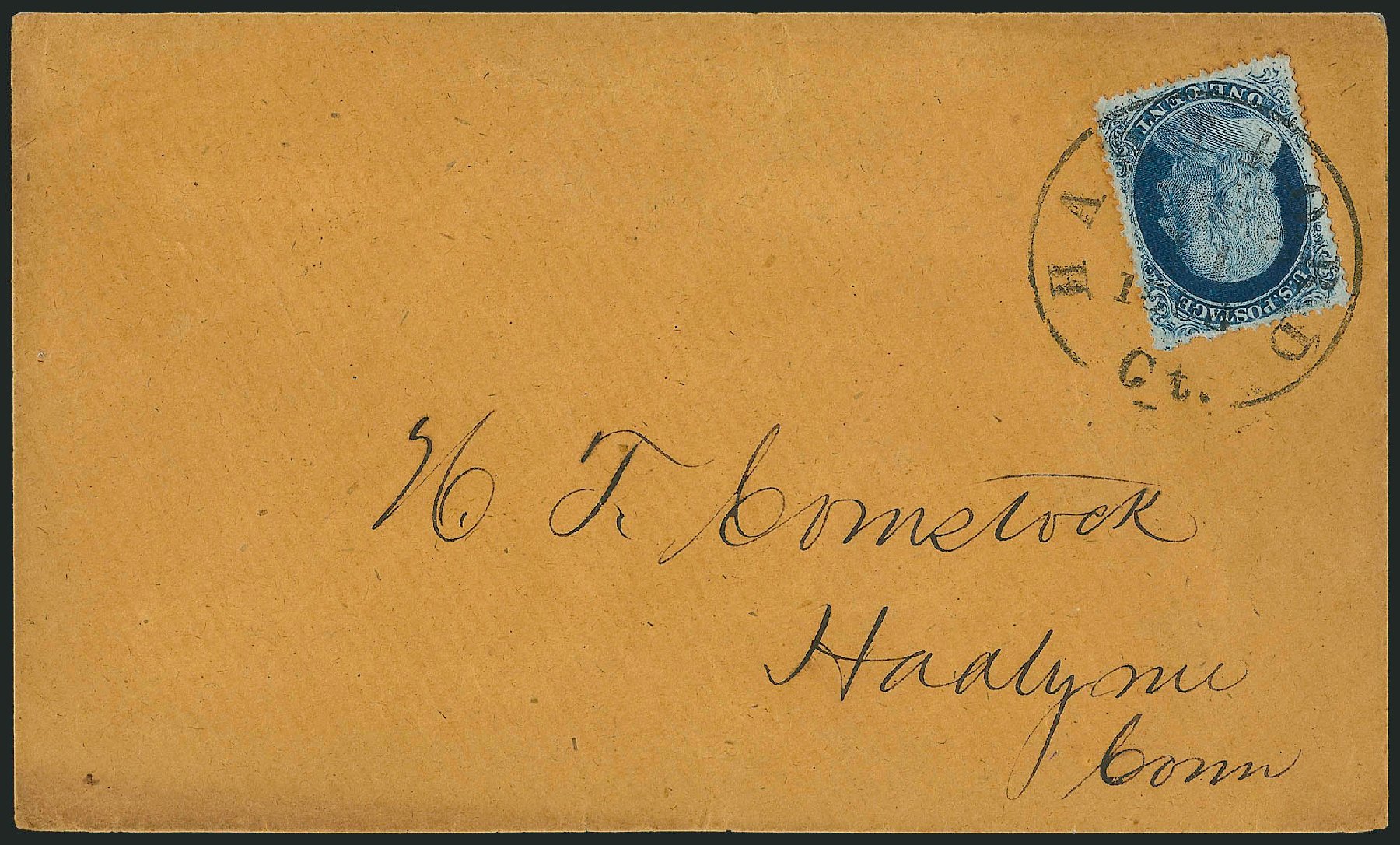
1c Blue, Ty. III, Position 99R2 (Scott 21). Deep rich color, unusually choice centering with wide and balanced margins all around which clearly show the characteristics of the type with wide breaks at top and bottom, tied by “Hartford Ct. Aug. 11, 1858” circular datestamp on buff cover to Hadlyme Conn., stamp has a few gum toned perfs and single pulled perf at top EXTREMELY FINE APPEARANCE. THE FINEST OF THE THREE RECORDED COVERS BEARING THE PERFORATED ONE-CENT 1857 ISSUE FROM POSITION 99R2, WHICH PRODUCED THE FINEST EXAMPLE OF TYPE III. On Plate 2, 198 of the 200 positions were Type II. Position 100R was Type II in the early stage of the plate, but as wear began to weaken the bottom line, it became Type IIIa with a small break at bottom. Positions 89R and 99R on Plate 2 have been the focus of special attention, because of their unusual nature. Ashbrook states: “A study of the double transfers of 89R2 and 99R2 is most interesting, because here in a vertical pair of positions we have two distinct varieties… The 99R2 stamp is a fresh entry that was short transferred both at top and bottom over an original entry that had been erased… The stamp, 89R2, is a re-entry, but not in the proper sense of this term, because the re-entry on the lower part of this position was an error, as it was not made to correct an existent fault of the original 89R transfer.” Plate 2 stamps were issued imperforate from December 1855 through June 1857. Beginning in July 1857 stamps from Plates 1 Late, 2 and 4 were issued with perforations, and Plates 2 and 4 continued to produce stamps through late 1857. Plate 2 stamps are rarer perforated than in imperforate form, conversely, Plate 4 stamps are rarer imperforate than in perforated form. However, perforated 99R2 stamps are of extreme rarity. Our unpublished census of Position 99R2 contains one unused in a block of nine, three on covers, two in strips of three and 18 used singles. Ex Chase and Ishikawa Robert Siegel Auction Galleries, Mar 2011, Sale 1006, Lot 1076 |
US$11,500.00 |
|
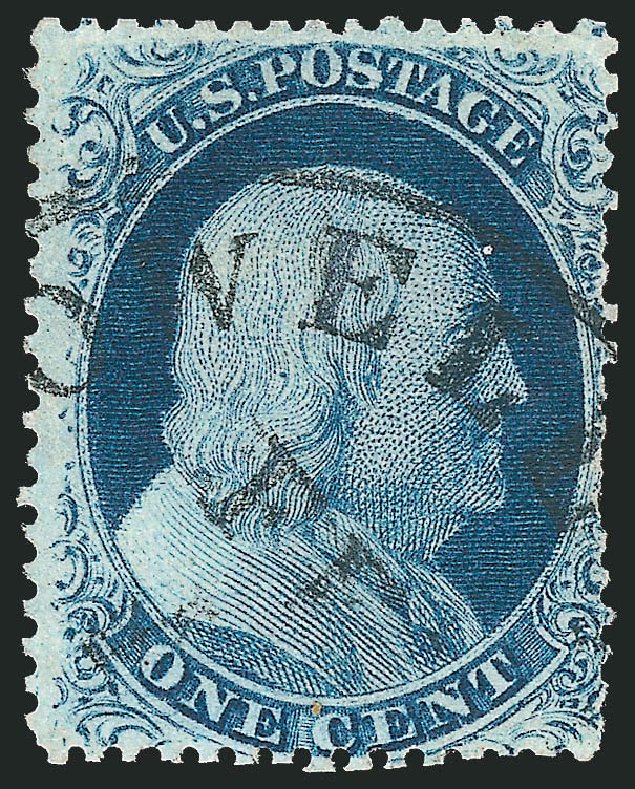
1c Blue, Ty. III, Position 99R2 (Scott 21). Rich color, neat strike of circular datestamp, few short perfs at right FINE CENTERING. A RARE EXAMPLE OF THE PERFORATED ONE-CENT 1857 ISSUE FROM POSITION 99R2. On Plate 2, 198 of the 200 positions were Type II. Position 100R was Type II in the early stage of the plate, but as wear began to weaken the bottom line, it became Type IIIa with a small break at bottom. Positions 89R and 99R on Plate 2 have been the focus of special attention, because of their unusual nature. Ashbrook states: “A study of the double transfers of 89R2 and 99R2 is most interesting, because here in a vertical pair of positions we have two distinct varieties… The 99R2 stamp is a fresh entry that was short transferred both at top and bottom over an original entry that had been erased… The stamp, 89R2, is a re-entry, but not in the proper sense of this term, because the re-entry on the lower part of this position was an error, as it was not made to correct an existent fault of the original 89R transfer.” Plate 2 stamps were issued imperforate from December 1855 through June 1857. Beginning in July 1857 stamps from Plates 1 Late, 2 and 4 were issued with perforations, and Plates 2 and 4 continued to produce stamps through late 1857. Plate 2 stamps are rarer perforated than in imperforate form, conversely, Plate 4 stamps are rarer imperforate than in perforated form. Our unpublished census of Position 99R2 contains one unused in a block of nine, three on covers, two in strips of three and 18 used singles. Most have faults or are very off-center. Ex Neinken Robert Siegel Auction Galleries, Mar 2011, Sale 1006, Lot 1075 |
US$2,000.00 |
|
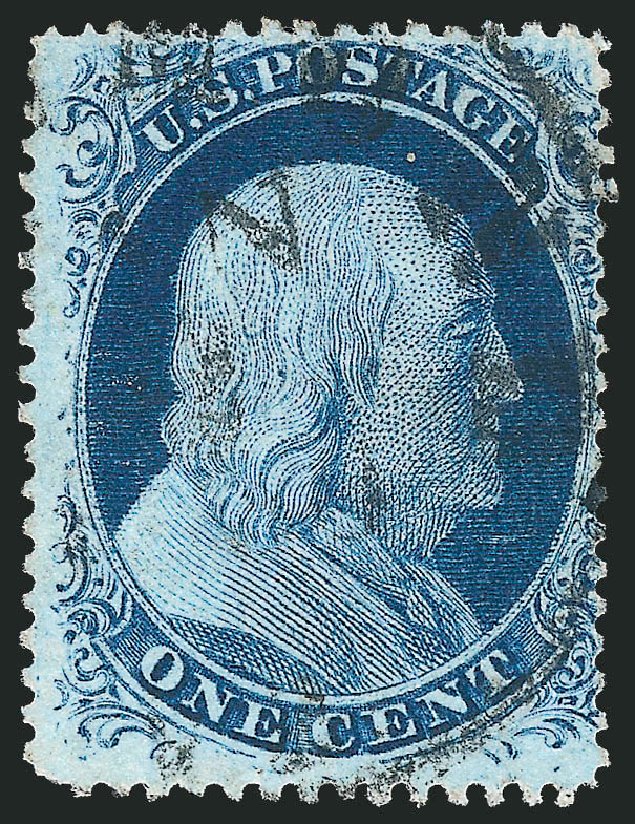
1c Blue, Ty. III, Position 99R2 (Scott 21). Rich color, face-free strike of circular datestamp, light diagonal crease at bottom left VERY FINE APPEARING EXAMPLE OF THE EXTREMELY RARE PERFORATED ONE-CENT 1857 ISSUE FROM POSITION 99R2. On Plate 2, 198 of the 200 positions were Type II. Position 100R was Type II in the early stage of the plate, but as wear began to weaken the bottom line, it became Type IIIa with a small break at bottom. Positions 89R and 99R on Plate 2 have been the focus of special attention, because of their unusual nature. Ashbrook states: “A study of the double transfers of 89R2 and 99R2 is most interesting, because here in a vertical pair of positions we have two distinct varieties… The 99R2 stamp is a fresh entry that was short transferred both at top and bottom over an original entry that had been erased… The stamp, 89R2, is a re-entry, but not in the proper sense of this term, because the re-entry on the lower part of this position was an error, as it was not made to correct an existent fault of the original 89R transfer.” Plate 2 stamps were issued imperforate from December 1855 through June 1857. Beginning in July 1857 stamps from Plates 1 Late, 2 and 4 were issued with perforations, and Plates 2 and 4 continued to produce stamps through late 1857. Plate 2 stamps are rarer perforated than in imperforate form, conversely, Plate 4 stamps are rarer imperforate than in perforated form. However, perforated 99R2 stamps are of extreme rarity. Our unpublished census of Position 99R2 contains one unused in a block of nine, three on covers, two in strips of three and 18 used singles. Most have faults or are very off-center. With 1986 P.F. certificate Robert Siegel Auction Galleries, Mar 2011, Sale 1006, Lot 1074 |
US$4,250.00 |
|
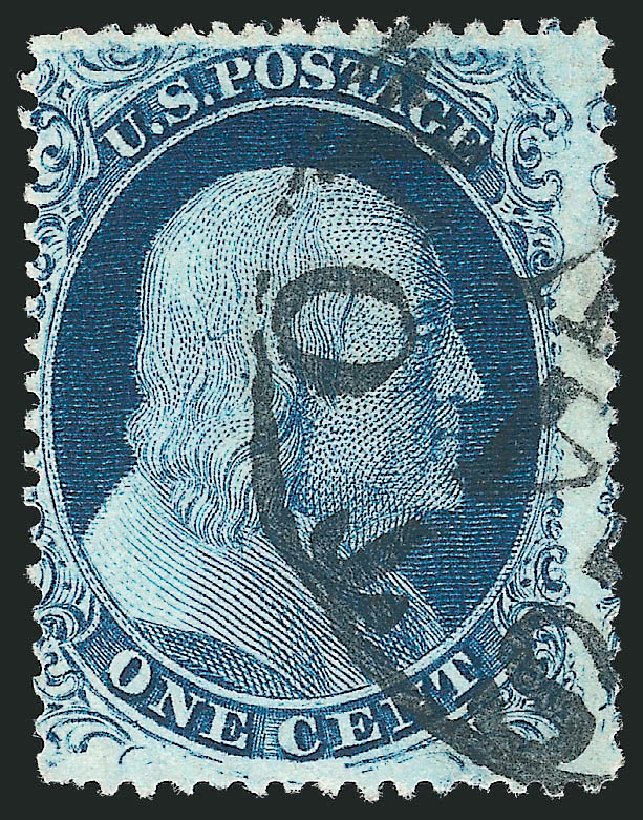
1c Blue, Ty. III, Position 99R2 (Scott 21). Deep rich color and proof-like impression, neat strike of Boston circular datestamp, completely sound, top and bottom perfs well clear of the significant portions of the design, extra wide right margin shows the characteristic double tansfer, few nibbed perfs at right VERY FINE. AN EXTREMELY RARE SOUND EXAMPLE OF THE PERFORATED ONE-CENT 1857 ISSUE FROM POSITION 99R2. THIS POSITION FURNISHED THE BEST EXAMPLES OF TYPE III. On Plate 2, 198 of the 200 positions were Type II. Position 100R was Type II in the early stage of the plate, but as wear began to weaken the bottom line, it became Type IIIa with a small break at bottom. Positions 89R and 99R on Plate 2 have been the focus of special attention, because of their unusual nature. Ashbrook states: “A study of the double transfers of 89R2 and 99R2 is most interesting, because here in a vertical pair of positions we have two distinct varieties… The 99R2 stamp is a fresh entry that was short transferred both at top and bottom over an original entry that had been erased… The stamp, 89R2, is a re-entry, but not in the proper sense of this term, because the re-entry on the lower part of this position was an error, as it was not made to correct an existent fault of the original 89R transfer.” Plate 2 stamps were issued imperforate from December 1855 through June 1857. Beginning in July 1857 stamps from Plates 1 Late, 2 and 4 were issued with perforations, and Plates 2 and 4 continued to produce stamps through late 1857. Plate 2 stamps are rarer perforated than in imperforate form, conversely, Plate 4 stamps are rarer imperforate than in perforated form. Our unpublished census of Position 99R2 contains one unused in a block of nine, three on covers, two in strips of three and 18 used singles. Most have faults or are very off-center. This sound example is a true rarity, as it clearly shows the characteristics of the type and is sound. Ex Sheriff. With 1986 P.F. certificate. As another indication of rarity, we have offered only one used single and one on cover since our 1998 Zoellner sale when we sold the unique unused block. Robert Siegel Auction Galleries, Mar 2011, Sale 1006, Lot 1073 |
US$7,500.00 |